If your heating bill already stung last winter, brace yourself: it’s set to sting more this year. The good news is that learning how to lower your heating bill doesn’t require a home renovation or a new furnace. Most of the savings come from a handful of small, boring habits, plus a couple of programs almost nobody bothers to use.
Below, we’ve split the fixes into three tiers by cost and effort: free changes you can make today, upgrades under $50, and assistance programs that quietly exist for exactly this kind of winter.
Why heating costs are climbing again this winter
According to the National Energy Assistance Directors Association (NEADA), U.S. households can expect to spend around $1,030 to heat their homes this winter, an increase of roughly 8.7% over last year, more than double the pace of inflation. The increase depends heavily on which fuel heats your home.
| Heating fuel | Estimated increase this winter (2026-27) |
|---|---|
| Electricity | Up to about 9% |
| Natural gas | Up to about 5.8% |
| Propane | Up to about 8.7% |
| Heating oil | Up to about 31% |
Figures are NEADA’s national estimates for the 2026-27 heating season and can vary by region, provider, and local weather. Heating oil users, especially in the Northeast, are facing the steepest jump because oil prices track volatile global petroleum markets. The U.S. Energy Information Administration (EIA) publishes its own Winter Fuels Outlook every October, which tends to confirm or adjust these early estimates.
None of that means you’re stuck paying more. It just means the free and cheap fixes matter more this year than they did last year.
Tier 1: Free ways to lower your heating bill today
These cost nothing but a few minutes, and they’re the first place to look before you spend a dollar.
- Nudge your thermostat down a couple of degrees. The Department of Energy has long estimated that you can save roughly 1% on heating costs for every degree you lower your thermostat over an 8 hour period. Setting it to around 68°F while you’re home and a bit lower while you’re asleep or out adds up fast.
- Open curtains on sunny days, close them at night. Sunlight through south-facing windows is free heat. Once the sun sets, closing curtains or blinds adds a layer of insulation against the cold glass.
- Reverse your ceiling fans. Most fans have a switch that reverses the blade direction. Running them clockwise on low pushes warm air that’s collected near the ceiling back down into the room.
- Replace or clean furnace filters. A clogged filter makes your system work harder to push air through, which burns more energy for the same amount of warmth. It’s usually a five minute job.
- Close doors and vents in rooms you don’t use. Why pay to heat a guest room or a closet? Shutting the door and the vent keeps that heat where you actually need it.

Tier 2: Upgrades under $50 that lower your heating bill fast
Once you’ve covered the free stuff, a small upfront cost can keep paying you back all season.
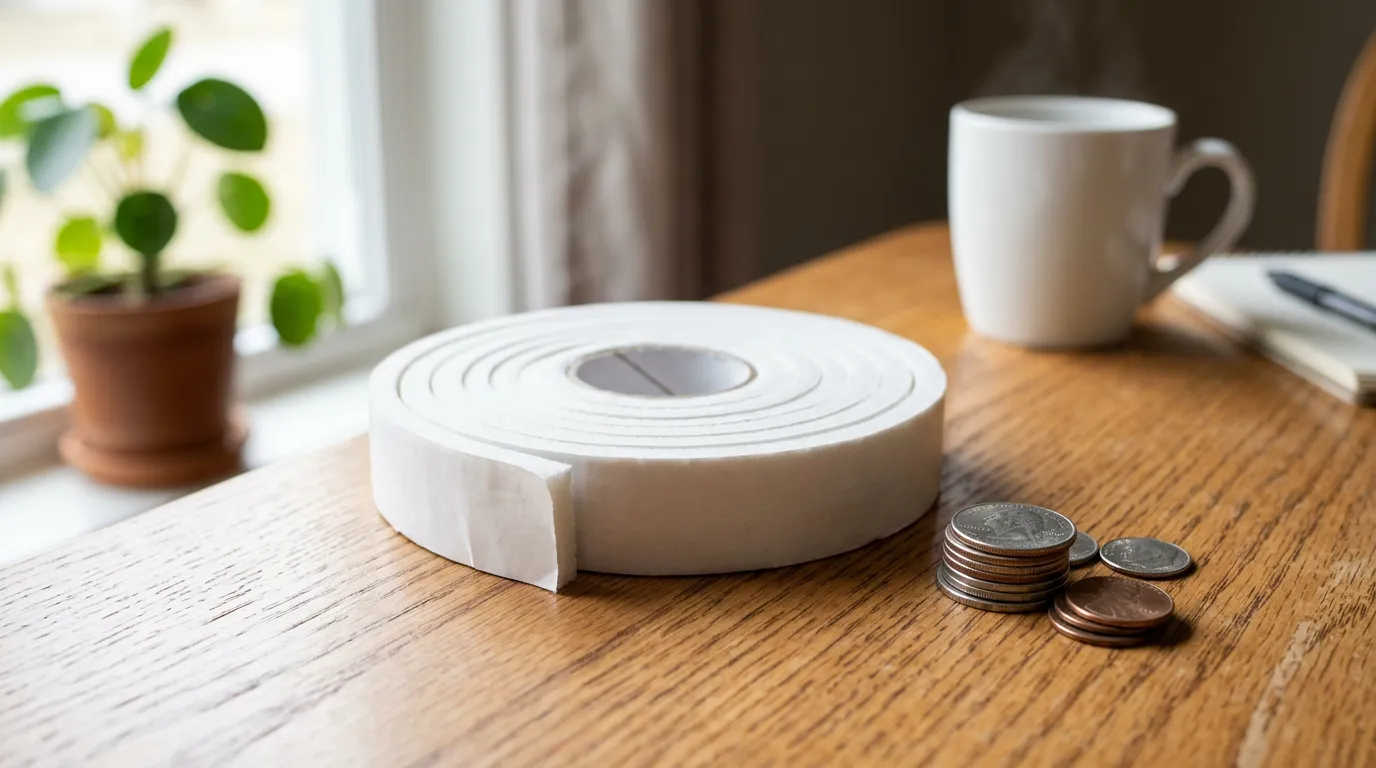
- Weatherstripping around doors and windows. Gaps around old door frames and window sashes let warm air leak out constantly. A roll of foam or rubber weatherstripping typically costs less than $15 and can be installed in an afternoon.
- Window insulation film kits. These shrink-wrap style kits create an extra air pocket over drafty windows. They run about $10 to $20 for a multi-window kit and can noticeably cut down on cold spots near glass.
- Draft stoppers for doors. A simple fabric tube along the bottom of an exterior door blocks one of the most common leak points in a house.
- Outlet and switch plate insulators. Exterior walls lose a surprising amount of heat through electrical outlets. Foam gaskets behind the plate cost just a few dollars for a whole house.
None of these require an electrician or a contractor. They’re the kind of fixes that, combined with tightening up your grocery budget for the season, can offset a good chunk of that projected 8.7% jump.
Tier 3: Programs almost nobody uses
This is where most people leave money on the table, mostly because they don’t know these programs exist or assume they won’t qualify.
- LIHEAP (Low Income Home Energy Assistance Program). This federal program, run through state and tribal energy offices, can help pay your heating bill directly to your utility. Eligibility is based on income and household size, and it varies by state, so it’s worth checking even if you assume you make too much. You can find your state’s office through the LIHEAP Clearinghouse or by calling 211.
- Budget billing. Most utilities offer a program that averages your annual usage into a flat monthly payment, so you’re not blindsided by a $300 bill in January. Call your utility and ask specifically for “budget billing” or “levelized billing.”
- Free home energy audits. Many utilities are required to offer a free or heavily discounted energy audit. An auditor identifies exactly where your home is leaking heat, which turns guesswork into a prioritized list.
- Weatherization Assistance Program (WAP). A separate federal program that can fund actual home upgrades, like insulation and sealing, for qualifying low income households, at no cost to the homeowner.
If you’re behind on bills already, it’s worth reviewing your accounts the way we outlined in our guide to avoiding bank fees so a heating bill doesn’t trigger an overdraft on top of everything else.
Putting it together
Start with the free adjustments this week. Add the under $50 upgrades before the coldest stretch hits. Then call your utility or your state energy office about assistance programs, even if you’re not sure you’ll qualify. It costs nothing to ask, and eligibility rules shift from year to year.
Winter heating is one of those expenses that’s easy to put off thinking about until the bill arrives. If you haven’t done a broader check of your finances lately, it might be a good moment to revisit your mid-year money moves and see what else could use a refresh before the season gets expensive.
Frequently Asked Questions
What runs up a heating bill the most?
Your furnace or heat pump itself is usually the single biggest driver, but drafts around doors, windows, and outlets can waste a large share of the heat you’re already paying for. Older or poorly maintained systems also tend to run less efficiently, which can push costs higher even at the same thermostat setting.
Is it cheaper to leave the heat on all day, or turn it down when you’re out?
For most homes, turning the thermostat down while you’re away and letting it warm back up when you return uses less energy overall than keeping it at one steady temperature all day. The DOE’s general guidance suggests you can save around 1% for each degree you lower it over an 8 hour stretch, though the exact savings depend on your home’s insulation and local climate.
What’s the cheapest temperature to keep your house at in winter?
Energy.gov commonly cites around 68°F while you’re home and awake as a reasonable balance between comfort and cost, with a lower setting overnight or when no one’s home. Your comfortable number may differ, but every degree lower tends to translate into modest savings.
Is there a quick trick that actually cuts a heating bill?
There’s no single trick that replaces good habits, but reversing your ceiling fans to push warm air back down and sealing obvious drafts around doors and windows are two of the fastest, cheapest changes that tend to show up on the next bill.
Can I get help paying my heating bill if I’m behind?
Yes. LIHEAP and similar state programs exist specifically for this. Contact your state’s energy assistance office or call 211 before a missed payment turns into a shutoff notice. Many utilities also offer hardship programs or payment plans if you reach out proactively.