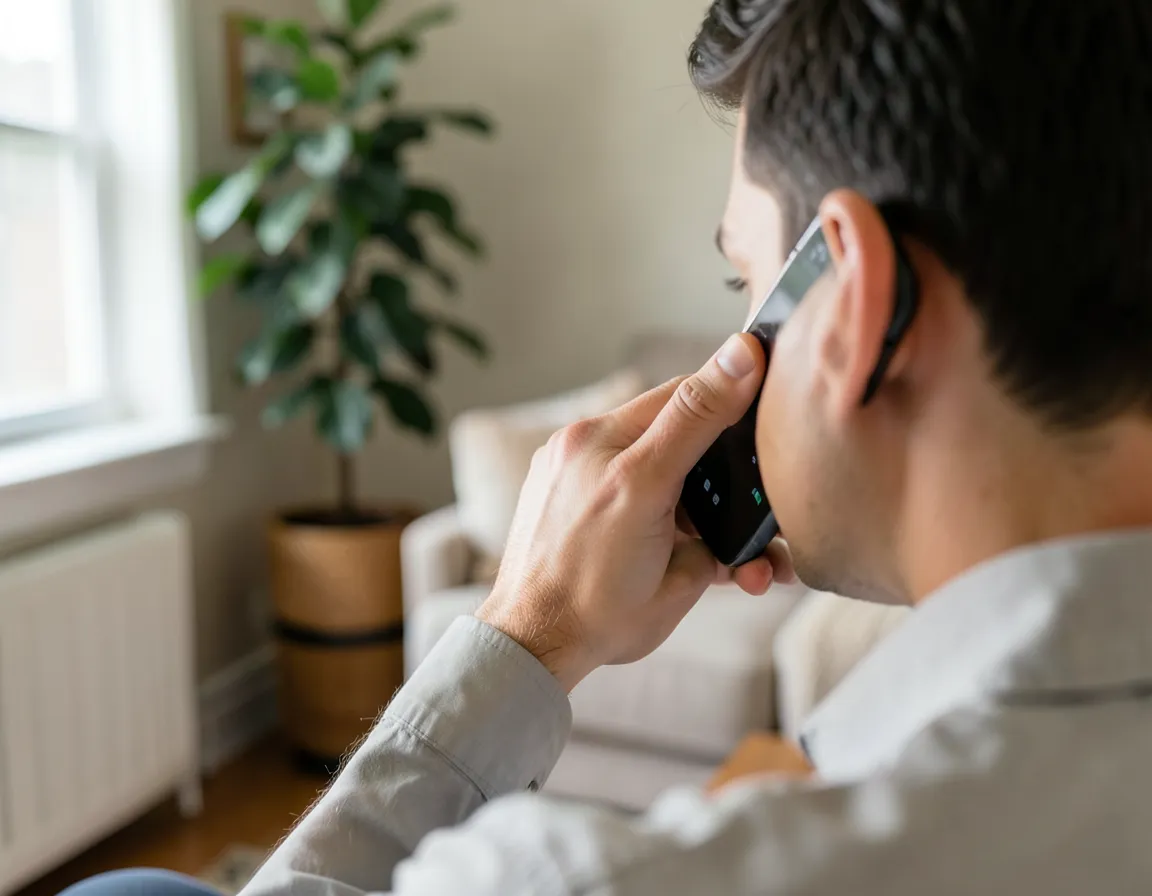
Your phone rings. It’s your mom’s number. You pick up, and she’s crying, saying she’s been in an accident and needs money wired right now. Her voice sounds exactly like her, the same tone, the same little laugh at the end of a sentence when she’s nervous. Except it isn’t her. It’s an AI-generated copy of her voice, built from a few seconds of audio a scammer pulled off her public social media videos.
This is an AI voice cloning scam, and it’s not science fiction anymore. The FBI issued a fresh consumer warning about these “loved one in distress” calls in June 2026, and reported losses tied to AI-enabled fraud are already in the hundreds of millions of dollars. Most people assume a familiar voice on the phone is proof enough that it’s really them. That assumption is exactly what scammers are counting on.
Here’s how these calls actually work, and the specific steps you and your family can take today so a fake call never costs you a dime.

What Is an AI Voice Cloning Scam?
An AI voice cloning scam is a type of fraud where criminals use artificial intelligence to recreate someone’s voice, then use that fake voice to trick a victim into sending money or sharing sensitive information. The scammer doesn’t need to be a tech expert. Free and low-cost AI voice tools, some built for entirely legitimate purposes like audiobooks or accessibility, can now clone a voice from a short audio clip.
The scam almost always follows the same emotional playbook: someone you love is in trouble, and only fast action (usually a wire transfer, gift cards, or crypto) can fix it. The panic is the point. It’s designed to short-circuit the part of your brain that would normally stop and ask questions.
How Scammers Get Your Loved One’s Voice
You might assume this kind of fraud requires hacking into someone’s phone. It usually doesn’t. Voice cloning tools can work from surprisingly little material, and most of us hand that material over for free every day.
- Social media videos: A birthday post, a TikTok, or an Instagram Story can supply enough clean audio to train a clone.
- Public interviews or webinars: Anyone with a LinkedIn presence or a podcast appearance has audio floating around online.
- Robocall “voice harvesting”: A scammer calls a number and asks a question designed to get a “yes” or a longer sentence in response, then uses that clip to build the model.
- Voicemail greetings: A recorded outgoing message is often the easiest sample of all, and it’s public by design.
Security researchers at McAfee and Kaspersky have both noted that as little as three to ten seconds of clear speech can be enough for current-generation voice cloning software to produce a convincing fake. That’s shorter than most voicemail greetings.
Anatomy of a “Fake Family Emergency” Call
Not every voice cloning scam looks the same, but most follow a recognizable pattern. Once you’ve seen the shape of it, it’s much easier to spot in the moment.
- The setup. The scammer already has a cloned voice sample and, often, some basic personal details scraped from social media (where you live, family names, recent trips).
- The call comes in distressed. The cloned voice sounds panicked, tearful, or in pain. Background noise (sirens, crowd sounds, a “bad connection”) is often added on purpose to explain away anything that sounds slightly off.
- A second voice takes over. After a few seconds, a “police officer,” “lawyer,” or “doctor” gets on the line to explain the situation and demand payment. That handoff moves the call away from the voice that might tip you off.
- Urgency and isolation. You’ll often be told not to hang up and not to tell other family members “until it’s resolved.” That instruction alone is a red flag. Real emergencies don’t usually come with a gag order.
- Untraceable payment. The request lands on wire transfers, gift cards, or crypto, precisely because those are hard or impossible to reverse once sent.
Red Flags That Should Make You Pause
You don’t need to be a security expert to catch most of these calls. A short mental checklist is often enough.
- The caller demands secrecy or tells you not to contact other relatives.
- Payment is requested by gift card, wire transfer, or crypto instead of a traceable method.
- There’s intense pressure to act within minutes, with no time to think it over.
- The story shifts if you ask a follow-up, or the “loved one” avoids something only they would know.
- A second person suddenly joins claiming to be law enforcement, a lawyer, or a hospital employee.
- The number looks unfamiliar, even though the voice sounds like someone you know. Caller ID can be faked just as easily as a voice.
What to Do in the Moment
If you get a call like this, the goal isn’t to prove the voice is fake in real time. It’s to slow things down enough to verify independently.
- Hang up and call back on a number you already have saved. Don’t use any number the caller gives you.
- Ask a question only the real person would know. Not something public, but something private: an inside joke or a detail from a recent conversation.
- Use your family safe word. The FBI’s guidance recommends agreeing on a simple code word ahead of time. If the caller can’t produce it, that’s your answer.
- Slow down before you pay anything. Legitimate emergencies don’t require gift cards or crypto. If that’s the ask, treat it as a scam until proven otherwise.
- Verify through a second channel. Contact the hospital, police department, or embassy using a number you look up yourself, not one given to you on the call.
Set Up a Family Safe Word Before You Need It
The single most effective defense against a voice cloning scam costs nothing and takes about five minutes: agree on a family safe word now, before an emergency call ever comes in. Pick something short and memorable, and not something you’d ever post about online. Share it with immediate family and anyone who might reasonably call you in a real emergency.
This habit works because it doesn’t depend on your ability to spot an AI fake by ear, which is only going to get harder as the technology improves. It shifts the test from “does this sound right” to “do they know something only my family knows.”
What to Do If You Already Sent Money
If you’ve already wired money, bought gift cards, or sent crypto in response to one of these calls, acting fast can sometimes limit the damage, though recovery isn’t guaranteed and outcomes vary by payment method.
- Contact your bank or wire service immediately. Ask about reversing or freezing the transfer. Speed matters, since wires can become irreversible within hours.
- Report gift card scams to the retailer. Some retailers can freeze a gift card balance if you report the numbers quickly enough.
- File a report with the FBI’s Internet Crime Complaint Center (IC3.gov) and with the FTC at ReportFraud.ftc.gov. This creates an official record and feeds broader fraud-tracking efforts.
- Tell your family and community. Scammers frequently reuse the same script against multiple people in the same social circle.
Recovery of funds sent through wires, gift cards, or crypto is often difficult and isn’t guaranteed, so prevention through verification remains your strongest tool.

Related Scams Worth Knowing About
Voice cloning is just one piece of a larger fraud landscape leaning harder on AI every year. Long-con investment scams like “pig butchering” use a similar trust-building playbook, just stretched out over weeks instead of minutes. QR code scams (sometimes called “quishing”) rely on the same instinct to act fast without double-checking a source. And once money moves, the rules around getting it back look a lot like what you’ll find with common payment app mistakes that put your money at risk. If a “recruiter” ever pressures you the same way by text or phone, check the warning signs in our guide to spotting job scams, since the urgency-and-secrecy tactics overlap heavily.
Disclaimer
This article is for general educational purposes only and isn’t legal, financial, or law enforcement advice. Outcomes after fraud, including whether funds can be recovered, vary by situation and payment method. Always verify current guidance directly with the FTC, FBI, or your bank before acting.
Frequently Asked Questions
What do I need to know about AI voice cloning scams?
AI voice cloning scams use a copied or synthetic version of a real person’s voice to impersonate someone you trust, usually a family member “in distress.” Because the voice sounds familiar, victims often skip the verification steps they’d normally use with a stranger. The scam relies on urgency and emotion, not technical hacking, so the best defense is a verification habit like a family safe word, not trying to spot the fake by ear.
How can you tell if a caller is using an AI-cloned voice?
It’s getting harder to tell by sound alone, since modern cloning tools can reproduce tone, pacing, and small verbal habits. Instead of relying on how the voice sounds, focus on behavior: pressure to stay on the line, requests for secrecy, unusual payment methods, and vague answers to questions only the real person would know. Hanging up and calling back on a saved number is the most reliable check.
Is AI voice cloning illegal?
Using AI to clone someone’s voice isn’t automatically illegal on its own, since the same technology powers legitimate tools for accessibility, entertainment, and customer service. What’s illegal is using a cloned voice to defraud someone, which falls under existing wire fraud and impersonation laws. Several states have also passed or proposed laws specifically addressing AI voice and deepfake misuse, and enforcement keeps evolving.
How much money have people lost to AI voice cloning and deepfake scams?
Reported losses have grown quickly as the technology has become more accessible. The FBI has linked voice-cloning-style “loved one in distress” scams to hundreds of millions of dollars in reported losses, and Deloitte has projected that generative-AI-enabled fraud losses in the US could reach tens of billions of dollars by 2027 if the trend continues. These figures are estimates and may shift as more cases get reported.
What’s the best way to protect my family from a deepfake phone scam?
Agree on a family safe word with close relatives before you need it, and build the habit of calling back on a saved number rather than trusting caller ID. Limiting how much of your voice ends up in public videos helps too, though it’s not a complete fix since even a short voicemail greeting can be enough for a clone.
What should I do if I think I already fell for a voice cloning scam?
Contact your bank or payment provider right away to ask about reversing or freezing the transaction, then file a report with the FBI’s Internet Crime Complaint Center (IC3.gov) and the FTC at ReportFraud.ftc.gov. Acting quickly may improve your odds with certain payment methods, but recovery isn’t guaranteed and depends on how the money was sent.